How heavily decorated Classrooms might disrupt attention and learning In Young Children.
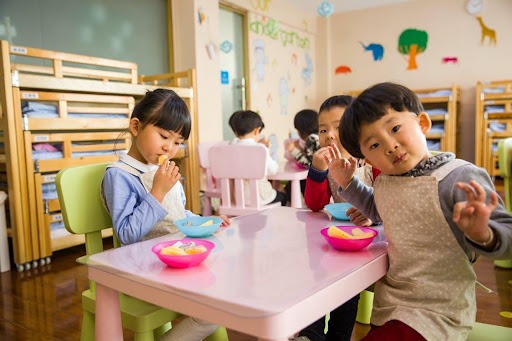
How heavily decorated classrooms might disrupt attention and learning in young children.
A classroom is a place where children learn new things. It is a place where children build their minds and gain knowledge.
In other words, we can say that a child’s future is dependent on the classroom in which he studies. Therefore, it is our responsibility to create a positive and healthy vibe there.
A classroom can become an innovative place for children when it is neat and clean and adorned with simple decorations.
But do you know that a heavily decorated classroom can disrupt attention and learning in young children?
Research has found that a classroom’s display affects a child’s ability to sustain focus while learning. Children get distracted very often in heavily decorated classrooms. Therefore, teachers need to know to keep a balance.
In this blog, we will talk about the disadvantages of a heavily decorated classroom and the ways in which we can improve this.
The Disadvantages of a heavily decorated classroom:
To understand this topic, you must know how to differentiate between simple decoration and heavy decoration.
How can you call a classroom heavily decorated?
- Students do not relate to the decoration.
A lot of us think that children will like the things that we like. In many schools, teachers decorate their classrooms according to their interests and opinions.
It may not be a good idea.
Instead of doing this, it is a better idea to let children decorate the bulletin board. Let them decide which diagram should be made and stuck on the walls. When children decorate the classroom themselves, they feel confident and focused on their studies. After all, a classroom is a place for children’s improvement, so why not do the necessary?
- There is no blank space.
Too much decoration will not help children gather information. It will rather disturb their studies in many ways.
A classroom should have a balanced decoration.
When every wall has diagrams, pictures, and quotations, it is difficult for students to focus on one particular thing. Hence, there should be blank spaces left on the walls.
- The decoration is uninteresting.
Teachers need to stick diagrams and pictures of things related to the current course of students. Pictures out of the syllabus are just a distraction for them and may not help them understand things.
Instead, decorating relevant stuff will assist teachers in educating children through available diagrams.
- There is only decoration and no education on the walls.
Too much clutter can distract students, especially when the walls are full of decoration and not quotations and diagrams related to their studies.
The classroom must not only contain decorating items.
Ways in which we can improve this:
There are several ways in which we can help in idealizing a classroom decoration.
- Add some visuals
Only written stuff like calendar, timetables, and quotations are not going to work. You should add some visuals, as visuals are an easy way of explaining things to students.
Try adding pictures, posters, and diagrams to your bulletin board and walls. In this way, you can improve your student’s visual learning.
- Use Student’s Work in your decorations.
In this way, students stay more focused when understanding things. It also helps in enhancing the sense of participation in them.
When you use children’s work for decoration, they feel confident and give their best to creativity. Using their work can also motivate other students to work hard and represent something else.
Therefore, you should change the decoration from time to time with new posters and pictures so that every student gets a chance to create and show something.
- Never display results and report cards.
Even if a student gets the highest marks in his batch, displaying results as decoration can demoralize other students. Hence, teachers should never use results or report cards as decoration for any student whosoever.
- Try to avoid clutter.
Be organized in your decoration and try to avoid too much clutter. A classroom wall filled with too many colors and pictures can become a distraction for students.
Try to keep it simple, tidy, and easy on the eye.
Use light colors and designs while filling the walls.
- Let the natural light in
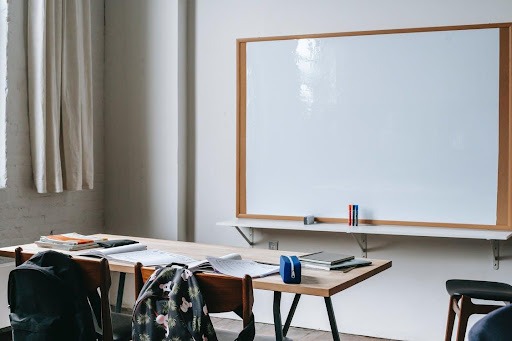
Do not cover the windows with pictures and stuff. It may not allow natural sunlight to enter the classroom.
Natural light is also essential for children, and they should be prone to nature for better growth.
The Importance of Decoration in a Classroom.
A classroom is a place of learning for students.
Children begin their growing journey with classrooms, and therefore schools must provide them with all the crucial elements that help them in their education and learning.
Decoration helps children understand better. Some children learn verbally, some visually, and some physically.
Since every student has a different way of learning, classrooms should have learning ways for all learners.
Simple diagrams, famous quotations, and mathematical formulas can be written down and stuck on the bulletin board.
By doing this, children are able to learn them because of their constant presence. It also impacts a child’s mind in staying focused during a class session.
Conclusion
With all the information given here, we hope you understand the importance of decoration in classrooms and how heavily decorated classrooms can disrupt attention and learning in young students.
Classrooms need to have a balance, and the ways given here can help you achieve that.
Thank You.

Leave a comment: